
What Causes Granule Loss on Shingles and How to Fix It
What Granule Loss on Shingles Means for Your Roof
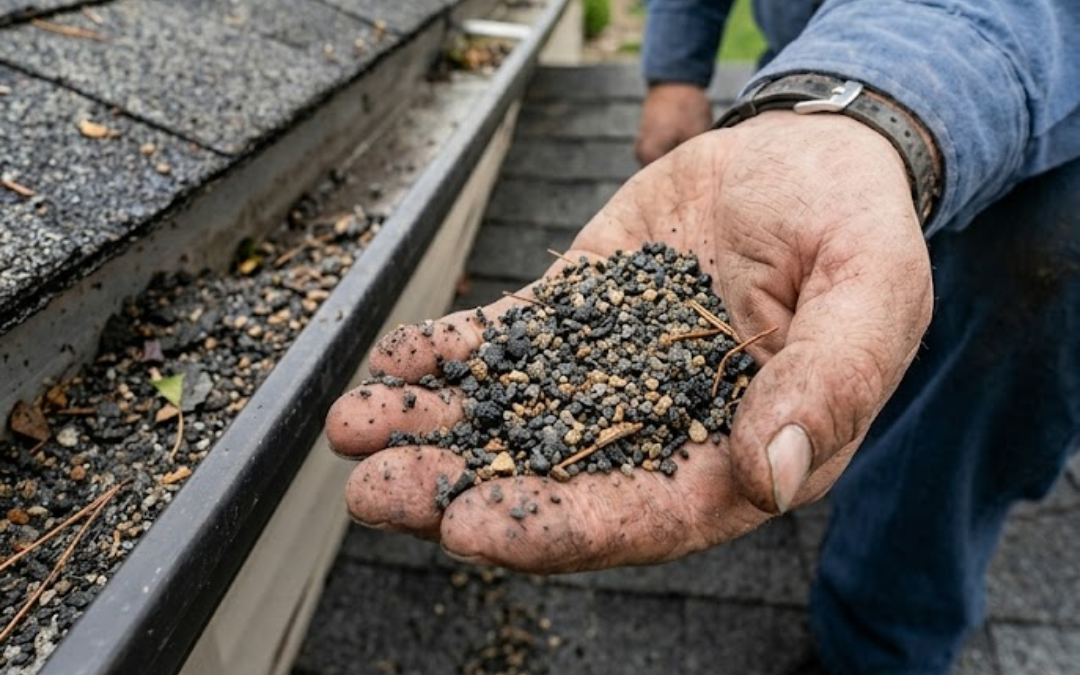
Granule loss on shingles is something most people do not really think about when it comes to their roof. ost people do not really think about their roof. And honestly, that makes sense. It is one of those things you expect to just work in the background. No noise, no trouble, no attention needed. You only start looking up when something feels a little off, like after a heavy rain or a strong wind. That is usually when small things begin to show up, like tiny dark bits collecting in the gutter or washing down near the ground. At first glance, it does not seem like a big deal. It just looks like dirt or leftover dust from the storm.
But here is something many homeowners do not realize. Those little bits are not just dirt. They are granules from your shingles, and they actually play a big role in protecting your roof. Are you a homeowner who has ever wondered if those small signs mean something more? Did you know your roof can show early warnings long before a real problem starts?
On this blog, we are going to talk about what those signs mean in a simple way. Because when granules start coming off, your roof is not being dramatic. It is just quietly telling you it needs a little attention before things get worse.
What Are Shingle Granules?
Granules are small stone-like pieces on top of shingles.
They help your roof:
- Block heat from the sun
- Handle rain and wind
- Stay strong for longer
Without them, shingles wear out faster.
Why Do Granules Fall Off?
There are a few common reasons.
1. Old Roof
Roofs wear out over time. As they age, granules slowly loosen and fall off. A little is normal, but too much is a warning sign.
2. Bad Weather
Heavy rain, hail, and strong wind can knock granules loose. After storms, some loss is expected.
3. Poor Installation
If shingles were not installed correctly, they may lose granules earlier than usual.
4. Walking on the Roof
Too much foot traffic can wear shingles down and loosen granules.
5. Clogged Gutters
Blocked gutters trap water on the roof, which speeds up damage.
6. Low Quality
Shingles Some shingles simply wear out faster than others.
When Should You Worry?
Usually okay:
- Small granules in gutters
- Light loss after storms
Not okay:
- Bare spots on shingles
- Constant heavy granules in gutters
- Roof looks uneven
- Leaks inside the house
How to Fix It
1. Check the Roof
A roof inspection helps you know if it is normal wear or damage.
2. Clean Gutters
This helps water flow properly and protects your roof.
3. Replace Damaged
Shingles Fixing small areas can stop bigger problems.
4. Add Protection if Needed
Some roofs may need extra layers underneath to stay strong longer.
5. Full Replacement
If damage is heavy, replacing the roof is often the best option.
Can You Prevent It?
You cannot stop it completely, but you can slow it down:
- Check your roof after storms
- Clean gutters often
- Trim nearby branches
- Fix small issues early
- Avoid walking on the roof too much
Your Roof Deserves a Quick Check-Up
Granule loss is one of those things that is easy to overlook. At first, it really does look like nothing more than a bit of dirt sitting in the gutter after rain. Most people would not think twice about it, and that is completely normal. But over time, those small signs start to add up, and they are often your roof’s way of showing that it is starting to wear down.
The shingles are slowly losing part of their защитive layer, and that is when problems can begin if they are left alone for too long. Even so, your roof is not without support. Underneath everything, the roofing membrane is still there, quietly doing its job and helping keep water out when the outer layer starts to weaken. That is why paying attention early makes such a big difference.
The simple approach is always the best one. Notice the small changes, take care of them while they are still manageable, and let your roof do what it was built to do, protect your home day after day. A roof does not need constant worry, but it does need a little care from time to time to stay in good shape.
If you are noticing granule loss or anything unusual on your roof, it is a good idea to have it checked before it turns into a bigger problem, and Twin Peaks Roofing and Construction is always ready to help you take a closer look and keep your home protected.
0 Comments