
Insulated Siding Explained: Can It Really Lower Your Energy Bills?
Have You Heard About Insulated Siding But Aren’t Sure What It Actually Does?
Insulated siding is one of the simplest upgrades you can make to stop wasting energy and money. If you’re a homeowner wondering whether it’s worth the cost, you’re not alone. Most people know siding protects their house from the weather and makes it look good, but few realize that siding can also play a big role in how much energy your home uses. If you’ve been hearing the term “insulated siding” and wondering whether it’s just another upsell or an actual upgrade worth your money, you’re asking the right question.
Every home loses some amount of heated or cooled air through its exterior walls. Traditional siding does little to stop that. Insulated siding is built differently, and that difference can show up directly on your monthly energy bill. On this blog, you’ll learn what insulated siding is, how it works, and what kind of savings you can realistically expect. By the end, you’ll be able to decide whether it’s the right fit for your home.
What Insulated Siding Actually Is
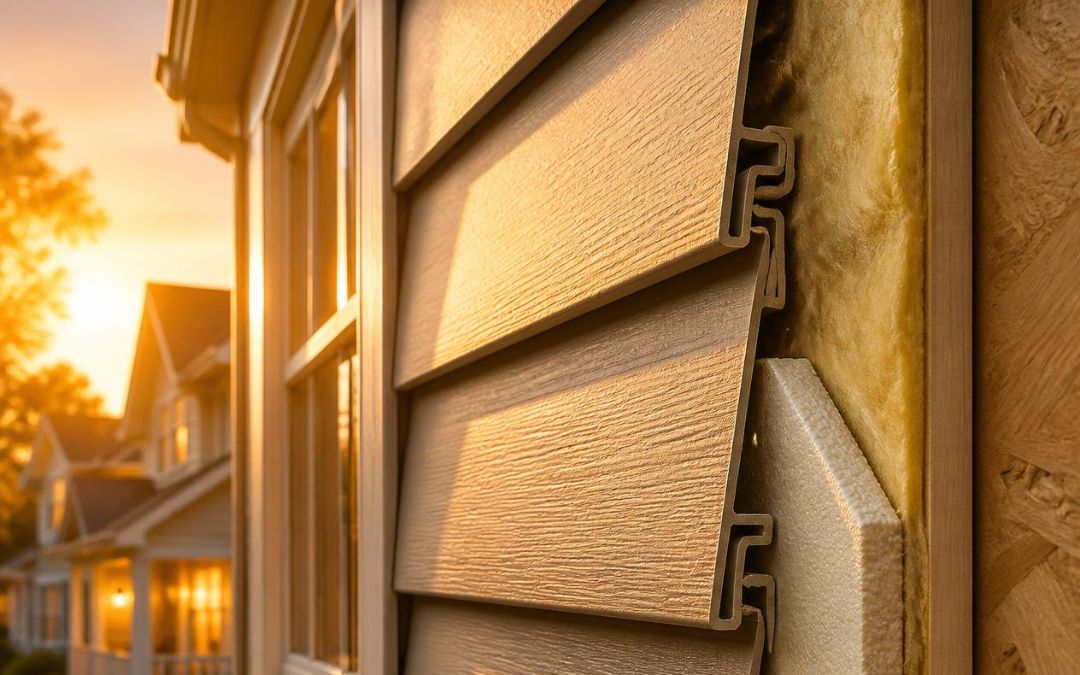
Insulated siding looks like standard vinyl or fiber cement siding on the outside, but it has a layer of rigid foam insulation permanently attached to the back. That foam backing is the key difference. Instead of just covering your walls, insulated siding adds a continuous layer of protection that helps keep conditioned air inside your home where it belongs.
How It Helps Lower Your Energy Bills
Your walls are full of small gaps, seams, and thin spots where heat can escape in the winter and sneak in during the summer. The foam layer behind insulated siding reduces this transfer by covering the entire wall surface, not just the space between studs like traditional insulation does. When less heated or cooled air escapes, your furnace and air conditioner don’t have to work as hard, which can lead to noticeable savings over time.
Understanding R-Value
You may have heard contractors talk about R-value, and it’s worth understanding since it’s the number that tells you how well a material resists heat flow. The higher the R-value, the better the insulation performance. Standard siding has little to no R-value on its own. Insulated siding adds anywhere from R-2 to R-6 depending on the product, giving your entire home an extra layer of resistance against outside temperatures.
It Smooths Out Your Home’s Weak Spots
Every home has thermal bridging, which is a fancy way of describing the spots where heat escapes more easily, like around studs, corners, and seams. Traditional insulation inside the walls can’t fully address these weak points. Because insulated siding wraps around the entire exterior, it helps even out these problem areas, so your home holds a steadier temperature from room to room.
Extra Benefits Beyond Lower Bills
Saving money on energy is a big draw, but it isn’t the only advantage. The foam backing adds rigidity, which makes the siding more resistant to dents and impacts. It also helps dampen outside noise, so a busy street or a loud neighbor becomes less noticeable indoors. Many homeowners also notice their walls feel warmer to the touch in winter since less cold is transferring through from outside.
What Affects Your Actual Savings
While insulated siding helps in every home, the exact savings depend on a few factors. Your climate, the age and construction of your house, how much insulation you already have, and the size of your home all play a role. Homes with older or thinner walls, or those in regions with extreme temperatures, tend to see the biggest difference after installation.
The Different Types of Insulated Siding
Insulated siding isn’t a single product. It comes in a few different materials, each with the same foam backing but a different look and price point.
Insulated Vinyl Siding – The most common choice, since it’s affordable and low maintenance.
Insulated Fiber Cement Siding – Costs more but offers extra durability and a more upscale appearance.
Insulated Steel Siding – Stands up well to dents, impacts, and harsh weather.
Insulated Aluminum Siding – Lightweight, rust resistant, and a solid option in coastal or humid climates.
Whichever material you choose, the foam backing is what delivers the energy savings, so the right pick usually comes down to your budget and the style you want for your home.
Is Insulated Siding Worth the Investment?
Insulated siding typically costs more upfront than traditional siding, but it’s designed to pay you back over time through lower energy bills, added durability, and reduced maintenance. For homeowners planning to stay in their home for several years, or anyone already due for a siding replacement, it’s an upgrade that keeps working for you long after installation day.
Should You Upgrade to Insulated Siding?
You don’t have to be replacing damaged siding to consider this upgrade.
If you’re dealing with high energy bills, rooms that never feel quite right, or you’re simply due for new siding, insulated siding is worth a serious look.
Upgrading can help improve comfort, lower energy costs, reduce outside noise, and give your home a fresh, refreshed exterior.
Ready to Learn More About Insulated Siding?
Your siding does more than protect your home from wind and rain. It plays a real part in how comfortable your home feels and how much you spend to heat and cool it every month. As energy costs continue to rise, small upgrades like this one can make a meaningful difference over the life of your home.
If you’ve been putting off a siding replacement or you’re curious whether insulated siding makes sense for your house, it’s worth getting a professional opinion. The right siding can improve comfort, help lower energy costs, and give your home a lasting, refreshed look, one you and your family can enjoy for years to come.
If you’re ready to explore insulated siding for your home, Twin Peaks Roofing & Construction is here to help. Reach out today to schedule a consultation and find the right siding for your home.
0 Comments