
Hail Damage vs. Wind Damage: Roof Storm Damage Inspection Tips
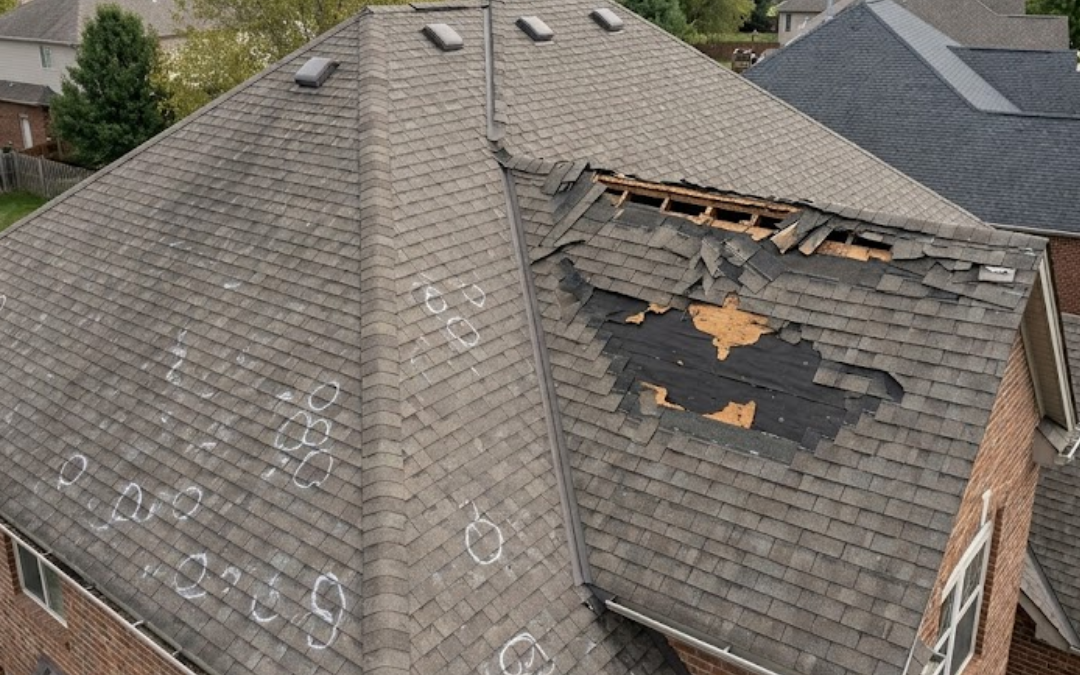
Do You Need a Roof Storm Damage Inspection?
A roof storm damage inspection is one of the most important things you can do right after a storm rolls through. Most homeowners walk outside, look up, and see… nothing obviously wrong. That’s actually pretty common, because both hail and wind damage can be subtle at first, and each one leaves a different kind of fingerprint on your roof. Knowing what you’re looking at matters, because hail damage and wind damage don’t always call for the same repair, and insurance companies often want to know exactly which one caused the problem.
If you’ve just been through a hailstorm, a windstorm, or both at once, you’re probably wondering whether your roof needs attention and how to check it safely. On this blog, you’ll learn the key differences between hail damage and wind damage, what each one looks like up close, and how to do a basic inspection without putting yourself at risk. By the end, you’ll know what to look for and when it’s time to call in a professional.
What a Roof Storm Damage Inspection Looks For
Every roofing material is built to handle normal wear, sun, and rain, but hail and wind attack a roof in very different ways. Hail hits with blunt, repeated impact, bruising or cracking the surface of shingles. Wind, on the other hand, gets underneath shingles and pries at them, working on the roof’s grip rather than its surface. That difference in mechanism is why the two types of damage look so different once you know what to check for.
Why It Matters Which One You’re Dealing With
Storm damage that goes unaddressed doesn’t stay the same size. A bruised shingle from hail can crack further and start leaking months later. A lifted shingle from wind can peel back completely in the next storm, exposing the underlayment and decking underneath. Identifying the damage correctly, and early, protects your roof’s ability to keep water out and helps you get the right repair instead of a guess.
Understanding Hail Damage
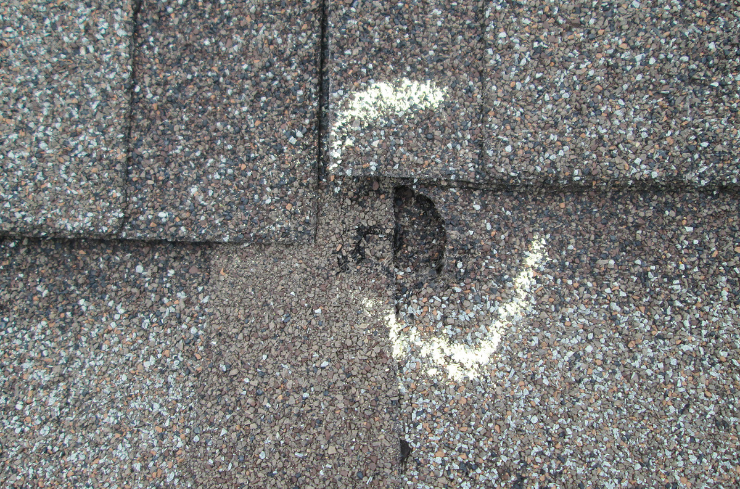
Hail damage tends to show up as small, random dents or bruises scattered across the roof, often more concentrated on slopes that faced the storm directly. On asphalt shingles, this can look like dark spots where the protective granules have been knocked loose, exposing the mat underneath. Hail hits are usually circular and randomly spaced, unlike the more directional patterns wind tends to leave. Softer metal surfaces like vents, flashing, and gutters often show hail dents too, and checking those can help confirm what you’re seeing on the shingles themselves.
Understanding Wind Damage
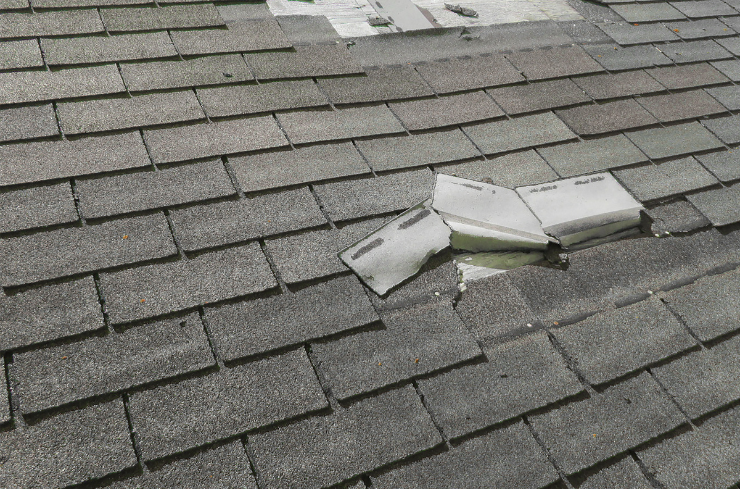
Wind damage is more about lifted, creased, or missing shingles than surface bruising. High wind gets under a shingle’s edge and can crease it, loosen its seal, or tear it off completely, often in a pattern that follows the direction the wind was blowing. You may notice shingles that look slightly raised, edges that are curling, or granules collecting in gutters and downspouts even without visible dents. Missing shingles, exposed nail heads, or bare patches of decking are some of the clearest signs that wind got underneath the roofing system.
Telling the Two Apart
Because hail and wind often show up in the same storm, it’s common to see a mix of both types of damage on one roof. As a general rule, circular bruising and granule loss point to hail, while lifted, torn, or missing shingles point to wind. Checking multiple areas of the roof, not just the section that seems most damaged, gives a clearer overall picture and helps separate what each type of storm actually caused.
What to Do Before You Inspect
Never inspect a roof by climbing onto it after a storm, especially if it’s still wet, sloped, or if there’s any chance of additional weather moving in. Most of what you need to check can be done safely from the ground with binoculars or from a ladder looking at the roofline, gutters, and downspouts. Photos of any dents, missing shingles, or debris in the gutters are useful to have on hand, whether for your own records or for an insurance claim.
A Basic Ground-Level Inspection Checklist
Walk the perimeter of your home and look for: granules collecting at the base of downspouts, dented or dinged gutters and vents, shingles that look curled, cracked, or missing, and any exposed patches on the roof’s surface. Inside the house, checking the attic for new water stains, light coming through the roof deck, or a musty smell can also point to damage that isn’t visible from outside.
Are These Repairs Worth Getting Checked Right Away?
Storm damage doesn’t always cause an immediate leak, but that doesn’t mean it isn’t worth addressing. Small hail bruises and lifted shingles are exactly the kind of damage that gets worse with time and the next storm. Getting an inspection soon after a storm, especially one that produced hail or high winds in your area, gives you the best chance of catching problems early and, if needed, filing an insurance claim within your policy’s window.
Should You Get a Professional Roof Inspection?
You don’t need visible leaks or missing shingles to justify a closer look. If your area just went through a hailstorm or high winds, or your neighbors are having roof work done, it’s worth having your roof checked before small damage turns into a bigger repair. A professional inspection can confirm what type of damage occurred, document it properly for insurance purposes, and give you a clear picture of what repairs, if any, are needed.
Not Sure What Your Roof Went Through?
Your roof is your home’s first line of defense against the weather, and storm damage doesn’t always announce itself right away. Whether it’s hail, wind, or both, catching the signs early can be the difference between a simple repair and a much bigger project down the road.
If you’ve recently been through a storm and aren’t sure what you’re looking at, it’s worth getting a professional set of eyes on your roof. Twin Peaks Roofing & Construction is here to help. Reach out today to schedule a storm damage inspection and find out exactly what your roof needs.
0 Comments